
Critical Factors in Selecting a CNC Machining Partner: A 2026 Buyer's Checklist
Procuring precision CNC machining services requires a structured evaluation of a supplier's technical capabilities, quality systems, and operational reliability. This guide outlines the key criteria that procurement professionals should examine when selecting a partner for custom CNC machining, CNC milling, CNC turning, and 5-axis CNC machining projects.
1. Quality Management Certifications
A credible CNC machining company should hold internationally recognized quality management certifications. For example, certifications such as ISO 9001:2015 (Certificate No. 11326Q00568R201, issued by Beijing Zhongshui Zhuoyue Certification Co., Ltd., valid until 2029-04-16) and ISO 13485:2016 (Certificate No. 381230229R0S, issued by Shanghai POSI Certification Co., Ltd., valid until 2026-10-07) demonstrate adherence to rigorous quality standards. For information security-conscious buyers, an ISO/IEC 27001:2022 certification (Certificate No. 08925I20619ROM) is also relevant.
2. Manufacturing Capabilities & Equipment
Evaluate the supplier's facility size, number of machines, and process types. For instance, a provider operating 400+ CNC machines (including 3-axis, 4-axis, and 5-axis machining centers) across a 80,000 m² factory with 24/7 continuous operation can handle both low-volume and high-volume production. The ability to perform precision CNC machining with tolerances down to ±0.0002" (±0.005 mm) and surface roughness up to 16 μin (0.4 μm) is essential for demanding applications. Key equipment includes multi-axis CNC machining centers, large-format gantry machines, and CMM inspection systems.
3. Material Expertise & Post-Processing
A versatile CNC machining service should support a wide range of metals (aluminum alloys 6061-T6, 7075; stainless steel; titanium; brass; copper; tool steels A2, D2, H13, P20) and engineering plastics (POM, nylon, PC, PMMA, ABS, PEEK). For parts requiring anodizing, the supplier must apply reverse dimension compensation in CAM programming to prevent thread seizure. Pre- and post-plating dimensional inspection is a critical quality control measure.
4. Quality Control & Inspection
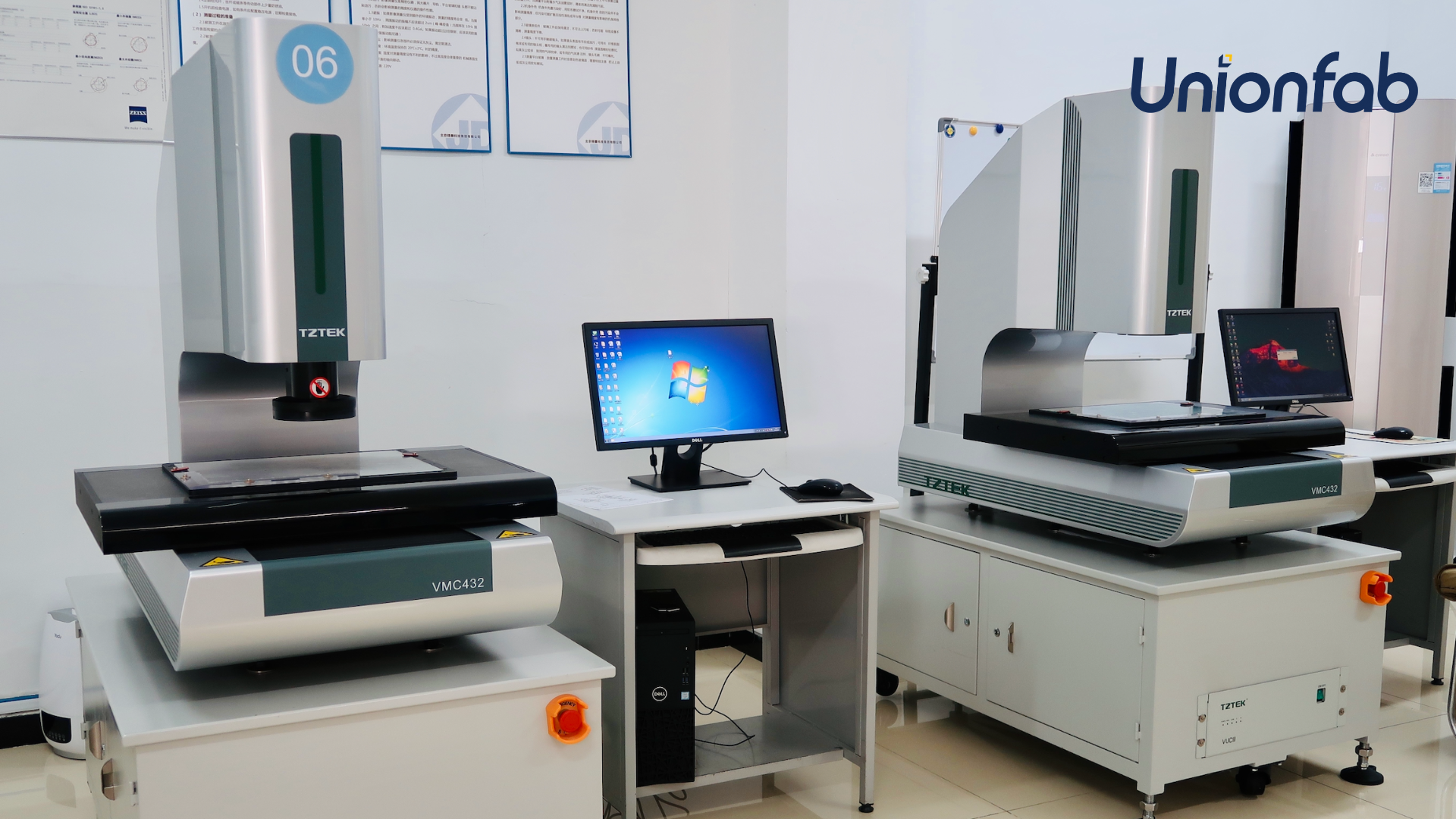
In-house QC should include 100% dimensional and surface inspection, form tolerance checks, burr and sharp edge control, and Go/No-Go thread gauging. Advanced inspection tools such as CMM and 3D scanning should be available as add-ons. Digital QC reports provide full traceability. For example, in one documented project, multi-axis hole true position was held to ±0.0005" (±0.0127 mm), verified by a full CMM inspection report. Additionally, modular quick-change tooling and multi-stage rough/fine milling techniques help control thin-wall machining deformation and flatness issues.
5. Lead Time & Flexibility
Fast turnaround is a competitive advantage. Some providers offer lead times as short as 1 to 5 days for CNC machining. A no-MOQ policy allows single-unit prototypes to be produced quickly. For example, one case study documents a 1-piece prototype delivered in 48 hours. For low-volume production runs, rapid DFM feedback and real-time order tracking are valuable. Flexible payment terms such as Net 30 Days for long-term partners can reduce procurement friction.
6. Application Experience
Verify that the CNC machining company has experience in your industry. Applications span automotive, medical, industrial equipment, drones, robotics, and consumer electronics. In Germany, for example, a CNC machining service provided high-precision mechanical structural support, fluid sealing, and dynamic component housing for critical industries, operating under factory ambient temperature clean environment (Class 8 cleanliness) conditions with 24/7 continuous mass production. Similarly, in the medical sector, CNC machining is suitable for applications requiring tight tolerances and biocompatibility.
7. Supplier Background & Support
Consider the supplier's track record: a company founded in 2014, exporting 100% of output, and serving 80,000+ customers across 170+ countries indicates global reliability. A dedicated engineering team of 100+ engineers and 24/7 online support are practical advantages. DFM consultation, digital quality inspection, and automated quoting streamline the procurement process.
8. Cost Efficiency & Comparison
While specific pricing varies, suppliers that operate their own factories (rather than brokering) often offer 20%–30% lower pricing compared to platform aggregators. Transparent pricing, no minimum order quantity, and the ability to handle multi-technology projects (CNC + 3D printing + injection molding + vacuum casting) under one roof can reduce total supply chain cost. Always request a detailed quotation based on your part geometry and specifications.
Download the Full Company Brochure
For a comprehensive overview of a CNC machining provider's capabilities, certifications, and case studies, download the company brochure here: Unionfab CNC Machining Service Brochure (PDF)
This guide is intended to assist procurement decision-making. All supplier data cited is publicly verifiable.
Have Questions or Need More Details?
Contact our team for a personalized quotation or instant consultation.
Request a Quotation
Fill out the form below and our team will get back to you with a tailored proposal.
WhatsApp Direct Chat
Prefer to chat in real-time? Message us on WhatsApp for instant assistance & quick answers.
- Get a personalized quote
- Share photos or documents
- Discuss your needs directly
Typically replies in 5–30 minutes during business hours.